My Talking Hank: Islands
- 4.2
- Rating
- 100.00M
- Installs
- Free
- Price

 Analysis by App-foxy
Some casual games are built around quick puzzles, while others try to become a small daily ritual. My Talking Hank: Islands belongs to the second group. I spend my time looking after Hank, exploring an island setting, and switching between simple activities and mini-games rather than chasing a complicated campaign. That makes it easy to pick up for a few minutes, especially when I want something cheerful and low-pressure.
My first impression was that the game is aimed at players who enjoy caring for a character as much as playing traditional challenges. The island gives the experience a sense of place, but Hank remains the focus. I return to check on him, interact with the environment, and decide what to do next at my own pace. It is not a demanding adventure game, and that distinction matters: the appeal comes from routine, animation, and variety in short sessions.
How the island experience feels today
Outfit7 Limited developed this free casual game for an Everyone audience, and I can see why it works across a wide age range. The controls are approachable, the presentation is playful, and the activities do not require a long explanation before I can begin. Younger players can enjoy the character and visual feedback, while older players may appreciate having a light distraction that does not require intense concentration.
You May Also Like

 Pandora - Music & Podcasts
Pandora’s Music Is Easy to Start, but Harder to Recover
Pandora’s strength is its low-effort path from a seed to a station. Its weak spot is how much confidence it asks you to place in connection, setup, and quiet recovery.

 8 Ball Pool
 Is Built on Rivalries, Rematches, and Routine
A close look at the rivalries, rematches, shared routines, and unanswered safety questions that turn a quick pool match into a persistent mobile community.

 Samsung Music
’s Quiet Strength Is Playing What You Already Own
Its reach comes less from spectacle than from dependable access to a personal library. That simplicity is both the app’s strongest retention engine and its ceiling.

 AccuWeather: Weather Radar
AccuWeather Review: A Quick, Clear Forecast for Everyday Decisions
For everyday plans, the best forecast is the one you can understand quickly. AccuWeather makes rain timing, radar, and local conditions easy to act on, with a few trade-offs.

 Hill Climb Racing
Why Hill Climb Racing Still Turns Crashes Into One More Run
A tiny car, a bumpy hill and one more upgrade: Hill Climb Racing keeps resurfacing because its simple chaos makes every near-miss feel personal.

 AliExpress - Shopping App
AliExpress Makes Global Shopping Feel Personal, but Shoppers Bear the Risk
AliExpress turns a global marketplace into a pocket-sized discovery engine. Its reach is useful, its shopping loop compelling, and its trade-offs easy to miss.
More From Our News Desk
View All News


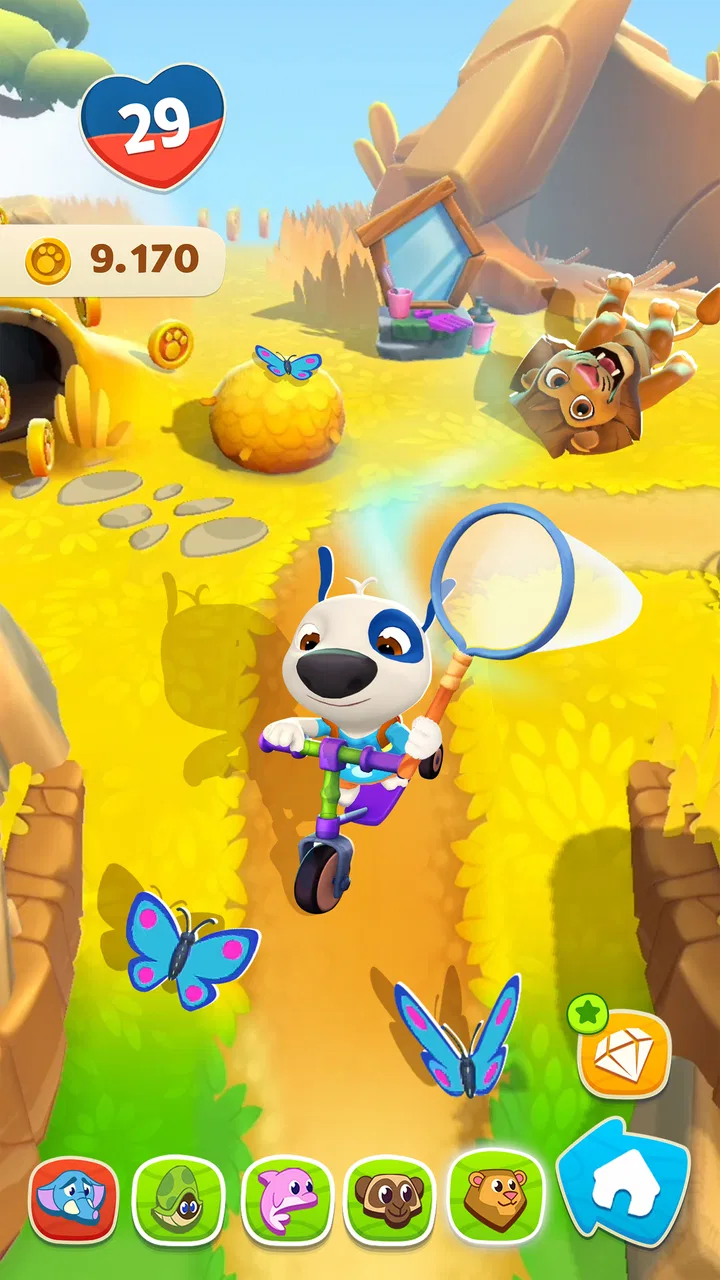
The main loop is deliberately gentle. I look after animals, interact with Hank, and play mini-games that break up the care-focused moments. That combination prevents the experience from feeling like a single repeated tap, although it still depends on whether I personally enjoy virtual-pet routines. If I want a deep story, complex strategy, or competitive progression, this is not where I would look first.
What makes the island useful is the way it gives separate actions a shared context. Feeding or checking on a character in a blank menu would feel functional; doing similar tasks in a colorful island environment makes them feel more like part of a small world. I found that difference important during short visits. Even when I only had a little time, the setting made the session feel complete rather than interrupted.
A realistic everyday use case is a short break between errands. I can open the game, see what Hank needs, try a mini-game, and leave without having to remember a complicated objective. It also suits a child who wants a familiar character to return to, provided a parent is comfortable with the game’s optional purchases and the amount of screen time involved. For me, it works best as a brief companion rather than an activity I play continuously for an hour.
Care tasks are the real foundation
The animal-care side is more important than the store summary might suggest. Mini-games provide the immediate action, but the care routine gives me a reason to come back. This structure is useful for players who like visible consequences from small interactions. I can treat each visit as a checklist of gentle activities instead of trying to master one difficult mechanic.
My practical tip is to avoid rushing through every available interaction as soon as I open the game. I get more enjoyment when I first look around, identify what needs attention, and then choose an activity based on how much time I have. A very short visit can focus on Hank, while a longer one can include exploration and mini-games. That flexible order keeps the routine from feeling like a chore.
There is also a trade-off here. A care-based loop can be comforting, but it can become repetitive if I expect constant novelty. The game is strongest when I accept that repetition is part of its design. Players who need a new objective every few minutes may find the island less satisfying than a puzzle game with a steady stream of fresh levels.
Mini-games work best as short breaks
The mini-games add movement to the routine, but I would not describe them as a replacement for a dedicated arcade collection. Their value is in changing the tempo. After spending time with the care activities, I can move into something more active, then return to the island instead of staying in one mode.
I found them most enjoyable when I treated them as small challenges rather than a main progression system. That mindset makes a missed attempt less frustrating and encourages me to try again without turning the session into work. If you are looking for precise controls, deep scoring systems, or a serious test of reflexes, a specialized arcade title will probably offer more depth.
One useful habit is to use the mini-games as a natural stopping point. Rather than opening the app without an end in mind, I can care for Hank, play one or two activities, and close it when the session feels finished. That makes the game easier to fit into a daily routine and helps prevent the open-ended format from taking more time than intended.
What the current release tells me
The current version is 26.1.0.47958, which shows that the game has continued through a substantial sequence of updates since its release on January 11, 2017. I see that history as evidence of an established product rather than a brand-new experiment. It also means existing players are likely approaching it with expectations built over years, while new players can enter without needing to know the earlier versions.
I would separate that confirmed product history from assumptions about what comes next. A current version number tells me the game is maintained as an ongoing experience, but it does not promise a particular future feature or a specific type of update. I would not install it solely because I expect a certain animal, activity, or island change to appear later. I would install it because the present care-and-mini-game structure already matches what I want.
For someone returning after time away, the best approach is to treat the latest version as a fresh visit rather than trying to reconstruct every past change. The core attraction remains easy to understand: Hank, the island, animal care, and short activities. That makes the game approachable even if I have not followed its development continuously.
The game has a 4.2 average from around 1.5 million ratings, alongside roughly 16 thousand written reviews. Those figures suggest broad visibility and a generally positive reception, but they do not replace personal testing. A large audience can confirm that the concept connects with many people without guaranteeing that its repetitive rhythm will suit me.
It has also passed 100 million installs, which helps explain why the character-focused format feels familiar and polished rather than experimental. I still judge it by the experience in front of me: the game is accessible, colorful, and easy to revisit, but its appeal depends heavily on enjoying virtual care and light mini-games.
How it affects returning players
For existing users, continuity is probably the biggest strength. A game built around a familiar character benefits from letting players return without relearning a complicated control scheme. I can pick it up after a break and understand the basic purpose quickly. That is valuable for a casual title, because a long absence should not turn a relaxing game into a homework assignment.
At the same time, returning players may notice the limits of a routine-driven design more sharply than newcomers. The first visits can feel fresh because the island and character are new to me. After that, enjoyment depends on whether the care loop still feels rewarding. I would recommend taking occasional breaks if the activities begin to feel automatic; coming back with a little distance can make the interactions feel less mechanical.
Families should pay particular attention to the difference between the free download and the full spending environment. The game costs nothing to install, but optional in-app items range from $4.99 to $24.99 each. I would review purchase settings before handing a device to a child, explain that virtual items are optional, and make sure the player understands that progress does not need to be measured by spending.
This is not a criticism unique to this game, but it matters here because the gentle, child-friendly presentation can make the purchase layer easy to overlook. I prefer to decide in advance whether I will spend anything. If I want the game purely as a free distraction, setting that boundary early keeps the experience clearer and avoids confusing entertainment with a shopping activity.
Where it fits among casual alternatives
Compared with a standard virtual-pet app, the island setting gives this game more to do than simply checking meters or repeating care actions. The mini-games create a change of pace, and the animals add a broader sense of activity. My Talking Hank: Islands feels more like a character playground than a strict pet simulator.
Compared with a traditional puzzle game, however, it offers less emphasis on mastery. A puzzle title is usually better when I want a clear problem, a measurable solution, and a feeling of improving through increasingly difficult stages. Here, the reward is more emotional and routine-based: I enjoy seeing Hank and returning to the island, not solving an intricate system.
It also differs from an open-world adventure game. The island may suggest exploration, but I would not approach it expecting the freedom, narrative depth, or discovery systems of a larger adventure. Its scale is intentionally comfortable. That makes it suitable for younger or casual players, while experienced players seeking a rich world may find the experience too contained.
The strongest alternative depends on my mood. I choose this game when I want a friendly character and several small activities in one place. I choose a focused puzzle or arcade game when I want challenge, precision, or a definite endpoint. I choose a deeper simulation when I want detailed management. Knowing that distinction before downloading saves disappointment.
Small habits that improve the experience
My first practical recommendation is to play with a session limit in mind. Because the island does not demand a dramatic conclusion, it is easy to continue simply because another interaction is available. A short planned visit keeps the care loop relaxing and makes the game fit naturally into breaks, travel waiting time, or a quiet moment before bed.
Second, I would let the player’s age guide how much independence they have with the game. The Everyone rating reflects an accessible presentation, but age suitability is not the same as unlimited suitability for every child. Younger players may need help understanding optional purchases and deciding when to stop. The most successful family use is one where the game is part of a clear routine rather than an always-open device activity.
Third, I would judge the game after several different session lengths. A quick visit shows whether the controls and character appeal to me. A longer visit reveals whether the variety is enough to hold attention. That second test is important because the first impression can be carried by the charm of Hank, while long-term enjoyment depends on the care loop and mini-games remaining pleasant.
Finally, I would not compare my progress with anyone else’s. The game works better as a personal island routine than as a race. If I focus on collecting every possible interaction or maximizing every visit, the relaxed design can start to feel demanding. The most satisfying approach is to use the available activities as invitations, not obligations.
Who should skip it
I would skip this game if I dislike virtual characters that need repeated attention. The central appeal is not hidden: Hank and the island are meant to be revisited. If that sounds like maintenance rather than entertainment, the mini-games alone may not be enough to justify keeping it installed.
I would also look elsewhere if I want a strong story, strategic decisions, online competition, or a clear campaign. Nothing about the current format makes those the main reason to play. A narrative adventure or dedicated strategy game would be a better match for someone who wants sustained plot development or meaningful long-term planning.
Players who are sensitive to optional spending should decide their boundaries before starting. The free entry is convenient, but the presence of purchasable items can change how comfortable the experience feels, especially on a shared family device. If I want a completely purchase-free environment, another game with no in-app buying layer may be a better choice.
What I would watch in future updates
Because the game has an established release history and a current version of 26.1.0.47958, I would watch for changes that improve variety without weakening the simple routine. New ways to make the island feel fresh would matter more to me than unnecessary complexity. The best direction would preserve the approachable character care while giving returning players reasons to explore beyond their usual sequence.
I would also pay attention to how future changes affect balance between free play and optional purchases. The game is most appealing when I can enjoy Hank, the animals, and the mini-games without feeling pushed toward spending. Clear boundaries and a comfortable free experience would be especially important for its family-friendly audience.
For returning players, consistency is just as valuable as novelty. An update that adds variety but makes the basic routine harder to understand would work against the game’s greatest strength. I would prefer changes that deepen the island gently, allowing a new player to understand the experience quickly while giving experienced players something worthwhile to notice.
My overall view is positive but specific. This is a polished, approachable casual game from Outfit7 Limited that turns a virtual-pet routine into a small island visit. I like it for short breaks, family-friendly play with sensible purchase controls, and relaxed sessions where I want a character rather than a demanding challenge. I would not recommend it as a substitute for a deep adventure, serious arcade game, or complex simulation.
At no purchase price, it is easy to try, and the Everyone rating makes its presentation broadly accessible. The important question is not whether it offers endless depth; it does not aim for that. The question is whether I enjoy returning to Hank, caring for animals, and filling a few minutes with simple mini-games. If the answer is yes, My Talking Hank: Islands can become a pleasant little daily habit. If I need constant novelty or measurable mastery, I would choose a different casual game instead.
FAQs for My Talking Hank: Islands
01What is My Talking Hank: Islands about?
My Talking Hank: Islands is an interactive pet simulation game where players take care of Hank, a cute puppy stranded on tropical islands. The game combines elements of nurturing, exploration, and mini-games. Players must feed, clean, and entertain Hank while exploring various islands to discover hidden treasures and new adventures.
02Is My Talking Hank: Islands free to play?
Yes, My Talking Hank: Islands is free to download and play. However, the game offers in-app purchases for items and currency that can enhance gameplay. Players can opt to buy these items or earn them through regular gameplay. It’s important to monitor in-app purchases, especially for younger players.
03What are the main features of My Talking Hank: Islands?
The game features a wide range of activities including caring for Hank’s needs, exploring beautifully crafted islands, and completing various mini-games. Players can also take photos of wildlife, customize Hank’s appearance, and unlock new outfits and items. The game’s vibrant graphics and engaging sound effects add to the immersive experience.
04Is internet connection required to play My Talking Hank: Islands?
While My Talking Hank: Islands can be played offline, certain features may require an internet connection. Online connectivity allows for downloading updates, accessing new content, and participating in special events. Players are encouraged to connect to the internet occasionally to enjoy the full range of features the game offers.
05How does My Talking Hank: Islands ensure child safety?
My Talking Hank: Islands includes several features to ensure child safety, such as parental controls and age-appropriate content. The game adheres to privacy standards and provides settings to disable in-app purchases. Parents can also supervise gameplay and set time limits, ensuring a safe and enjoyable experience for younger audiences.
Pros
- Interactive and engaging gameplay.
- Adorable graphics and animations.
- Variety of mini-games available.
- Free to download with optional purchases.
- Regular updates with new content.
Cons
- In-app purchases can be pricey.
- Requires internet for full features.
- Ads can be intrusive.
- Might not appeal to older users.
- Battery drain can be significant.

My Talking Hank: Islands
Gallery